Commercial Leaf Management: Protecting Safety, Appearance, and Landscape Health
Posted On
Falling leaves are one of the most visible signs of autumn, but for commercial properties, they also create important maintenance and safety concerns. When leaves accumulate across lawns, walkways, parking areas, planting beds, and drainage systems, they can affect both the appearance and functionality of the property.
For commercial property managers, HOA boards, developers, and facility managers, a structured leaf management program is essential for maintaining a clean, safe, and professional environment throughout the fall season. Consistent removal helps protect turf, support drainage, reduce slip hazards, and preserve the level of presentation expected across professionally managed properties.
Princeton Scapes provides comprehensive commercial leaf management services designed to support landscape health, improve site safety, and maintain consistent curb appeal throughout the season. With experienced professional crews and Certified Horticulturists on staff, service programs are tailored to each property’s tree canopy, layout, traffic patterns, and seasonal needs.
Why Commercial Leaf Management Matters
Leaf accumulation affects far more than visual appearance.
On commercial properties, unmanaged leaves can create wet, slippery conditions on sidewalks and entrances, interfere with drainage systems, reduce visibility along curbs and parking areas, and smother turf when left in place for extended periods.
As leaves become saturated with rain or morning moisture, they can create slick surfaces that increase risk in pedestrian areas. At the same time, dense leaf cover across turf can block sunlight and restrict airflow, contributing to stress and decline before winter dormancy.
A proactive leaf management program helps:
- Reduce slip and fall hazards
- Protect turf from prolonged leaf coverage
- Maintain drainage flow
- Preserve hardscape performance
- Support a clean and professional property appearance
- Reduce the need for extensive end-of-season cleanup
- Prepare the landscape for winter conditions
The objective is to maintain control throughout the season rather than waiting for leaf accumulation to become a larger operational issue.

Understand How Leaves Behave Across the Property
Every commercial property experiences leaf drop differently.
Tree species, canopy density, prevailing winds, building placement, parking areas, and landscape layout all influence where leaves accumulate and how quickly cleanup is required.
Some areas may remain relatively clear, while others can collect substantial leaf volume in a short period of time. Entrances, fence lines, building corners, curbs, drainage structures, and recessed planting beds are especially prone to wind-driven buildup.
A property-specific assessment may consider:
- Tree species and expected leaf-drop timing
- Canopy density and overall leaf volume
- Areas where wind pushes leaves into concentrated zones
- High-traffic pedestrian and vehicle areas
- Drainage structures vulnerable to blockage
- Turf areas likely to experience heavy coverage
- Planting beds where leaves can become compacted
Understanding these patterns allows Princeton Scapes to develop a service approach that aligns with actual site conditions rather than relying on a one-size-fits-all schedule.
Protect Turf Health Through Consistent Leaf Removal
Turf areas are particularly vulnerable to prolonged leaf coverage.
When leaves form a dense layer over grass, they block sunlight, restrict airflow, and trap moisture at the soil surface. These conditions can weaken turf, encourage disease development, and reduce overall density.
This is especially important during fall, when turf is preparing to enter winter dormancy. Grass that remains covered for extended periods may emerge in spring with thinning, discoloration, or areas requiring additional recovery.
Consistent leaf removal helps maintain access to light and air while reducing excess moisture accumulation.
For commercial properties with extensive lawn areas, regular service also supports a more uniform appearance and protects the investment already made in mowing, fertilization, aeration, overseeding, and other turf management practices.
Maintain Safe Walkways, Entrances, and Parking Areas
Pedestrian safety is one of the most important reasons for maintaining a consistent leaf management program.
Wet leaves can become extremely slippery on concrete, asphalt, pavers, ramps, stairs, and other hardscape surfaces. This creates avoidable risk for residents, employees, tenants, customers, patients, and visitors.
High-priority areas typically include:
- Main entrances
- Sidewalks and pedestrian paths
- ADA access routes
- Stairways and ramps
- Parking lots and loading areas
- Courtyards and common spaces
- Building access points
These areas often require more frequent attention than lower-traffic landscape zones.
Keeping high-use surfaces clear not only improves appearance but also supports safer daily operations across the property.
Protect Drainage Systems From Leaf Buildup
Leaf accumulation can significantly affect drainage performance during fall.
Leaves that collect in catch basins, trench drains, gutters, curb lines, and drainage channels can restrict water movement and contribute to pooling.
As temperatures decline, standing water can create additional concerns if it freezes on walkways, parking areas, or other hardscape surfaces.
Blocked drainage can also contribute to erosion, saturated planting beds, and water accumulation near buildings or retaining structures.
A professional leaf management program should include regular attention to drainage-related areas to keep runoff moving as intended.
Maintaining clear drainage pathways helps protect site infrastructure while reducing the potential for avoidable water and ice concerns later in the season.
Adjust Service Frequency as Leaf Drop Changes
Leaf management needs rarely remain the same throughout fall.
Early in the season, lighter service may be adequate. As more trees begin to shed foliage and peak leaf drop occurs, service frequency may need to increase substantially.
Properties with large mature tree populations may experience intense accumulation during relatively short periods, especially after wind or rain events.
Princeton Scapes adjusts service programs based on site conditions, canopy density, weather, and the stage of seasonal leaf drop.
This flexible approach helps maintain consistent property standards throughout the fall rather than allowing conditions to deteriorate between scheduled cleanups.
A well-managed program also prevents excessive buildup that can make later cleanups more labor-intensive and disruptive.
Manage Leaves Within Planting Beds Carefully
Leaves do not accumulate only on turf and pavement. They also collect around shrubs, perennials, ornamental grasses, walls, and other landscape features.
While some decomposing organic matter can contribute to soil health, excessive layers of compacted leaves can trap moisture, restrict airflow, and create unfavorable conditions around plant crowns and stems.
Planting beds therefore require a more precise approach than open lawn areas.
Crews must remove excessive accumulation without damaging sensitive plant material, disturbing mulch excessively, or compacting the surrounding soil.
Careful bed cleanup also contributes to a cleaner appearance around building entrances, signage, courtyards, and other prominent locations.
For commercial landscapes, this attention to detail helps preserve both horticultural health and presentation quality.
Coordinate Leaf Cleanup With Fall Landscape Maintenance
Leaf management is most effective when coordinated with the rest of the property’s fall maintenance program.
Turf renovation, bed cleanup, pruning, seasonal color removal, irrigation adjustments, and winterization activities may all occur during the same period.
Coordinating these services helps prevent crews from duplicating work and ensures that one activity does not interfere with another.
For example, leaves should be removed before certain turf treatments, while beds may need to be cleared before mulch adjustment or winter preparation.
A full-service landscape partner can sequence these activities more efficiently and maintain consistent standards across the entire site.
Complete a Thorough End-of-Season Cleanup
As the final stages of leaf drop occur, commercial properties benefit from a comprehensive end-of-season cleanup.
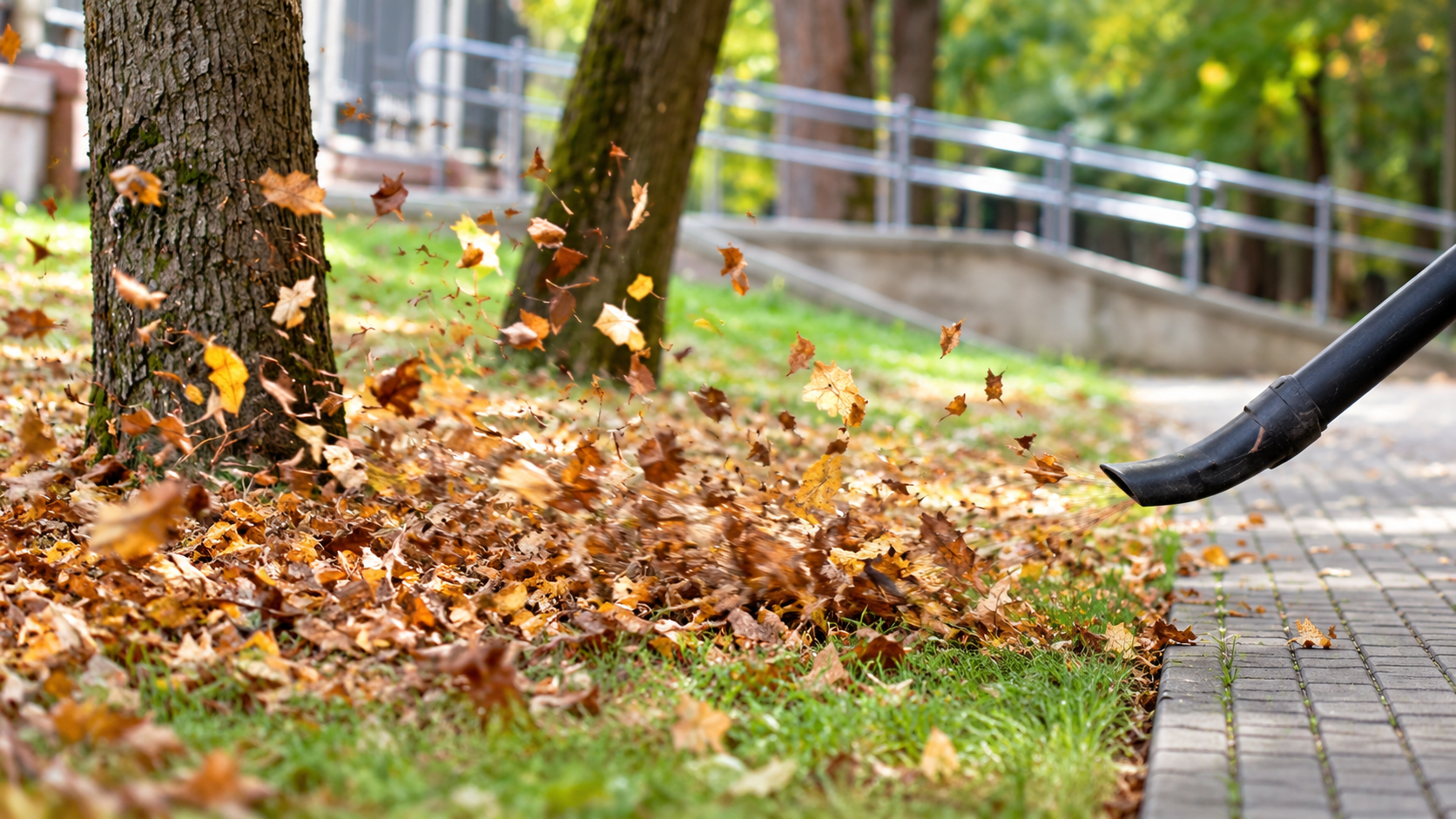
This typically includes clearing remaining leaves from turf, beds, walkways, parking areas, drainage structures, and other site features.
A final cleanup helps the landscape enter winter in a clean and orderly condition. It also reduces the amount of decomposing debris left in place under snow cover or prolonged wet conditions.
For property managers, this final service marks the transition from fall landscape maintenance into winter operations.
The result is a site that is better prepared for snow and ice management, winter inspections, and eventual spring recovery.
Maintain a Safer, Cleaner Commercial Property This Fall
Professional leaf management is an essential part of maintaining commercial landscapes during autumn. Consistent removal supports turf health, protects drainage systems, reduces slip hazards, and helps properties maintain a professional appearance throughout the season.
Princeton Scapes provides structured leaf management programs for commercial properties, multifamily communities, HOA-managed neighborhoods, office campuses, retail centers, and other professionally managed sites. With experienced crews, horticultural expertise, and comprehensive year-round landscape services, Princeton Scapes helps property teams maintain reliable standards as seasonal conditions change.
Connect with Princeton Scapes to develop a commercial leaf management program that supports property safety, protects landscape health, and maintains a clean, professional appearance throughout the fall season.