Winter Bed Preparation: Protecting Commercial Landscapes Through Dormancy
Posted On
As commercial landscapes transition into winter dormancy, planting beds require careful preparation to protect soil health, support plant material, and preserve the overall structure of the property. Winter bed preparation is an important seasonal service because it helps reduce cold-weather stress and positions the landscape for a stronger, more efficient recovery in spring.
For commercial property managers, HOA boards, developers, and facility managers, properly prepared planting beds contribute to both long-term landscape health and year-round property presentation. Clean edges, appropriate mulch levels, stable soil conditions, and properly managed plant material help commercial sites maintain a professional appearance even after active growth has ended.
Princeton Scapes provides winter bed preparation services guided by horticultural expertise and tailored to the specific conditions of each commercial property. With Certified Horticulturists on staff and experienced professional crews, bed preparation is approached as part of a broader year-round landscape management strategy.
Why Winter Bed Preparation Matters
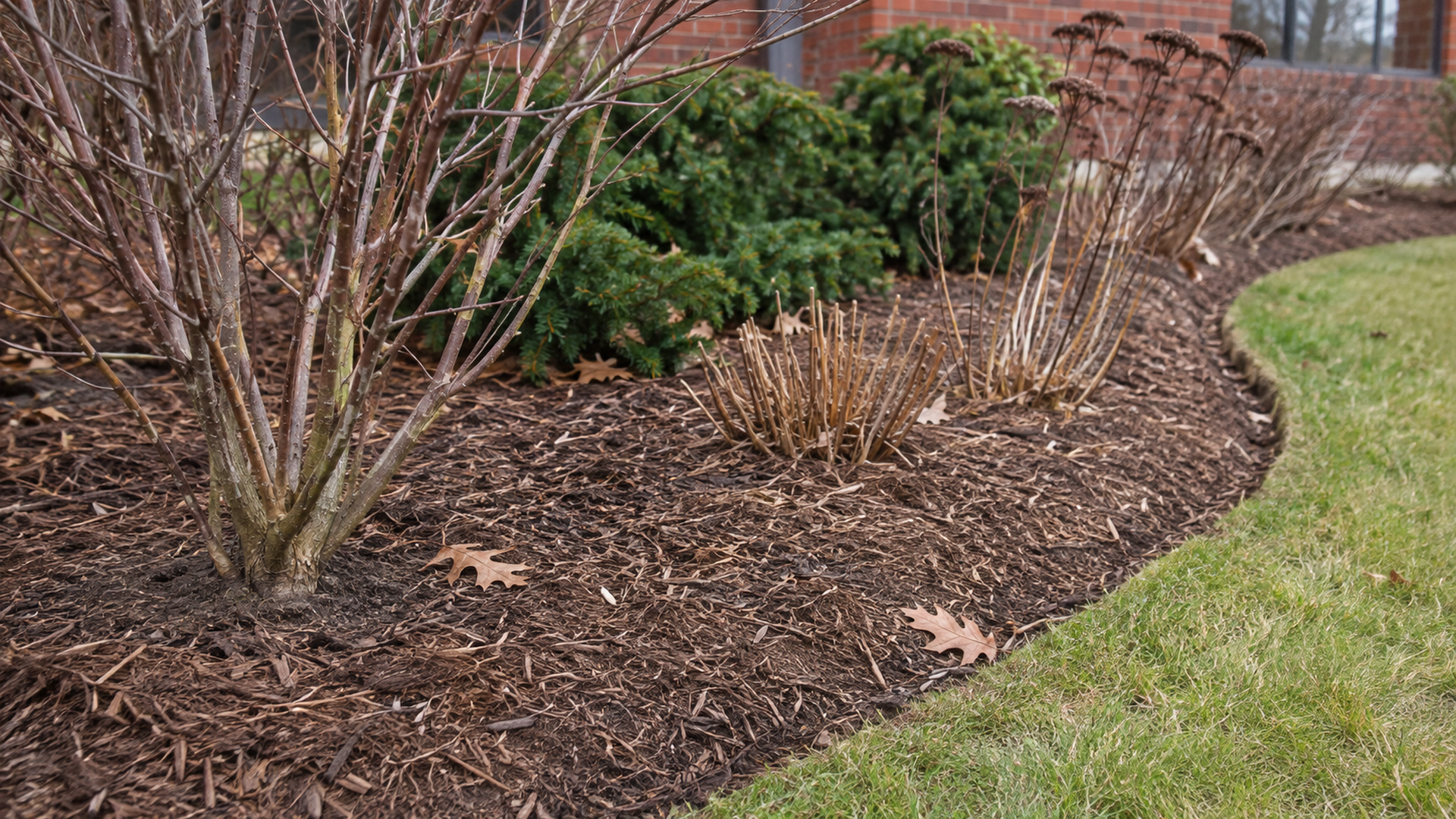
Winter can place significant stress on planting beds. Soil temperatures decline, moisture patterns change, freeze-thaw cycles become more frequent, and plant growth slows considerably. Without proper preparation, these seasonal conditions can contribute to erosion, root stress, drainage problems, excessive debris accumulation, and uneven spring recovery.
A structured winter bed preparation program can help:
- Protect the root systems of shrubs and perennials
- Maintain clean, orderly bed structure
- Reduce erosion and soil displacement
- Support appropriate winter moisture levels
- Preserve mulch coverage and soil insulation
- Improve spring readiness
- Maintain a professional dormant-season appearance
For commercial properties, these benefits extend beyond horticultural performance. Well-maintained planting beds help preserve the visual consistency of entrances, building foundations, signage areas, common spaces, and other high-visibility zones throughout the winter months.
Evaluate Planting Bed Conditions Before Winter
Effective preparation begins with a thorough assessment of existing conditions.
Princeton Scapes reviews planting beds to identify areas where plant health, soil structure, mulch depth, drainage, or bed definition may require attention. This assessment helps determine which services are appropriate for each area rather than applying the same treatment across the entire property.
The review may consider:
- Shrub and perennial condition
- Soil compaction and drainage
- Moisture levels
- Mulch depth and distribution
- Accumulated leaves and plant debris
- Erosion or soil displacement
- Bed edge definition
- Areas vulnerable to snow storage or winter maintenance activity
This site-specific approach helps property managers address potential problems before winter weather intensifies.
Refine Bed Edges for a Clean, Professional Appearance
As the growing season ends, planting beds can lose definition. Turf may encroach along edges, mulch may shift, and late-season growth can soften the clean lines established earlier in the year.
Refining bed edges before winter helps restore visual structure and reinforces an organized property appearance.
Defined bed lines are particularly valuable at entrances, courtyards, walkways, signage areas, and building foundations where landscape presentation remains visible throughout the dormant season.
Clear bed boundaries can also support more efficient winter operations. Well-defined planting areas make it easier for crews to distinguish landscape zones from turf, walkways, and snow storage areas, helping reduce unintended disturbance.
Remove Excess Debris and Spent Plant Material
Leaves, stems, annuals, and other organic material frequently accumulate in beds throughout fall.
While some organic matter can contribute to long-term soil health, excessive buildup can create unfavorable conditions. Thick layers of wet debris may restrict airflow, hold excess moisture, interfere with drainage, and contribute to disease or pest pressure.
Winter bed preparation includes removing unnecessary accumulation while preserving healthy plant material and appropriate soil protection.
This cleanup can include:
- Removing exhausted annuals
- Clearing heavy leaf buildup
- Removing diseased or damaged plant material
- Cleaning debris from around shrub bases
- Clearing drainage pathways within or adjacent to beds
A clean bed surface also improves the property’s appearance and creates a more orderly transition into winter.
Prepare Perennials for Dormancy
Perennials require species-specific care as they enter dormancy.
Some plants benefit from being cut back after their foliage declines, particularly when removing diseased or damaged growth can reduce future problems. Other perennials may be left standing to provide winter structure or protect crowns through colder conditions.
There is no single approach that is appropriate for every plant.
Princeton Scapes’ horticultural team evaluates perennial groupings based on species, condition, location, and long-term maintenance needs. This helps ensure that dormant-season preparation supports plant health rather than relying on broad, uniform cutting practices.
Properly managed perennials are better positioned for predictable emergence and stronger visual performance when spring growth resumes.
Manage Shrubs With Selective Seasonal Care
Shrubs also benefit from thoughtful evaluation before winter.
Late-season care may include removing dead or damaged branches, addressing minor structural concerns, or correcting growth that interferes with walkways, buildings, lighting, or signage.
However, extensive pruning is not appropriate for every shrub during this period. Timing matters, particularly for flowering species and plants that may be more vulnerable to cold injury following aggressive pruning.
Princeton Scapes uses a selective approach based on plant type and condition. The objective is to maintain structure, reduce avoidable risk, and support long-term plant performance without creating unnecessary stress.
Support Healthy Soil Conditions Before Freezing Weather
Soil condition plays an important role in how planting beds perform through winter.
Compacted soil can restrict drainage and root development, while poorly drained areas may remain saturated during periods of snowmelt or winter rain. As temperatures fluctuate, repeated freezing and thawing can contribute to heaving, erosion, and root stress.
Where appropriate, winter preparation may include addressing localized compaction, improving soil structure, correcting minor drainage concerns, or incorporating suitable organic material.
The goal is to create a stable root environment that manages moisture effectively through changing winter conditions.
For commercial properties, proactive soil management can also help reduce the amount of corrective work required when beds are reopened and refreshed in spring.
Refresh Mulch to Protect Root Zones
Mulch is one of the most effective tools for supporting planting beds through winter.
A properly maintained mulch layer helps moderate soil temperature, reduce moisture loss, limit erosion, and provide insulation around root zones.
During winter bed preparation, Princeton Scapes evaluates mulch depth and distribution and refreshes areas where coverage has become thin or uneven.
Proper application is essential. Excessive mulch can retain too much moisture, restrict airflow, and create problems when piled against trunks or shrub stems.
Mulch should be applied in a consistent, moderate layer and kept away from direct contact with woody plant material.
This approach provides protection while preserving healthy growing conditions.
Inspect Bed Drainage Before Freeze-Thaw Cycles
Drainage issues can become more serious during winter.
Water that collects in planting beds may freeze, thaw, and refreeze repeatedly, creating unstable soil conditions and increasing the potential for erosion, root damage, or heaving.
Before winter, planting beds should be reviewed for low spots, blocked drainage paths, poor grading, or other conditions that allow water to accumulate.
Where practical, minor adjustments can help improve water movement and protect plant roots during changing weather conditions.
Drainage review is particularly important near buildings, retaining walls, walkways, and other areas where water movement can affect both the landscape and surrounding infrastructure.
Protect Beds During Snow and Ice Operations
Commercial planting beds often border sidewalks, drive lanes, parking areas, and other zones that receive winter maintenance.
Snow storage, plowing activity, and deicing materials can place additional stress on shrubs, perennials, mulch, and soil.
Preparing beds for winter should therefore consider how snow and ice management will affect the landscape.
Sensitive areas may need to be identified in advance so that crews understand where plant material is most vulnerable. This coordination can help reduce mechanical damage, excessive snow loading, and unnecessary exposure to deicing materials.
Integrating landscape preparation with winter operations is one of the advantages of working with a full-service commercial landscape partner.
Maintain a Professional Appearance Throughout Dormancy
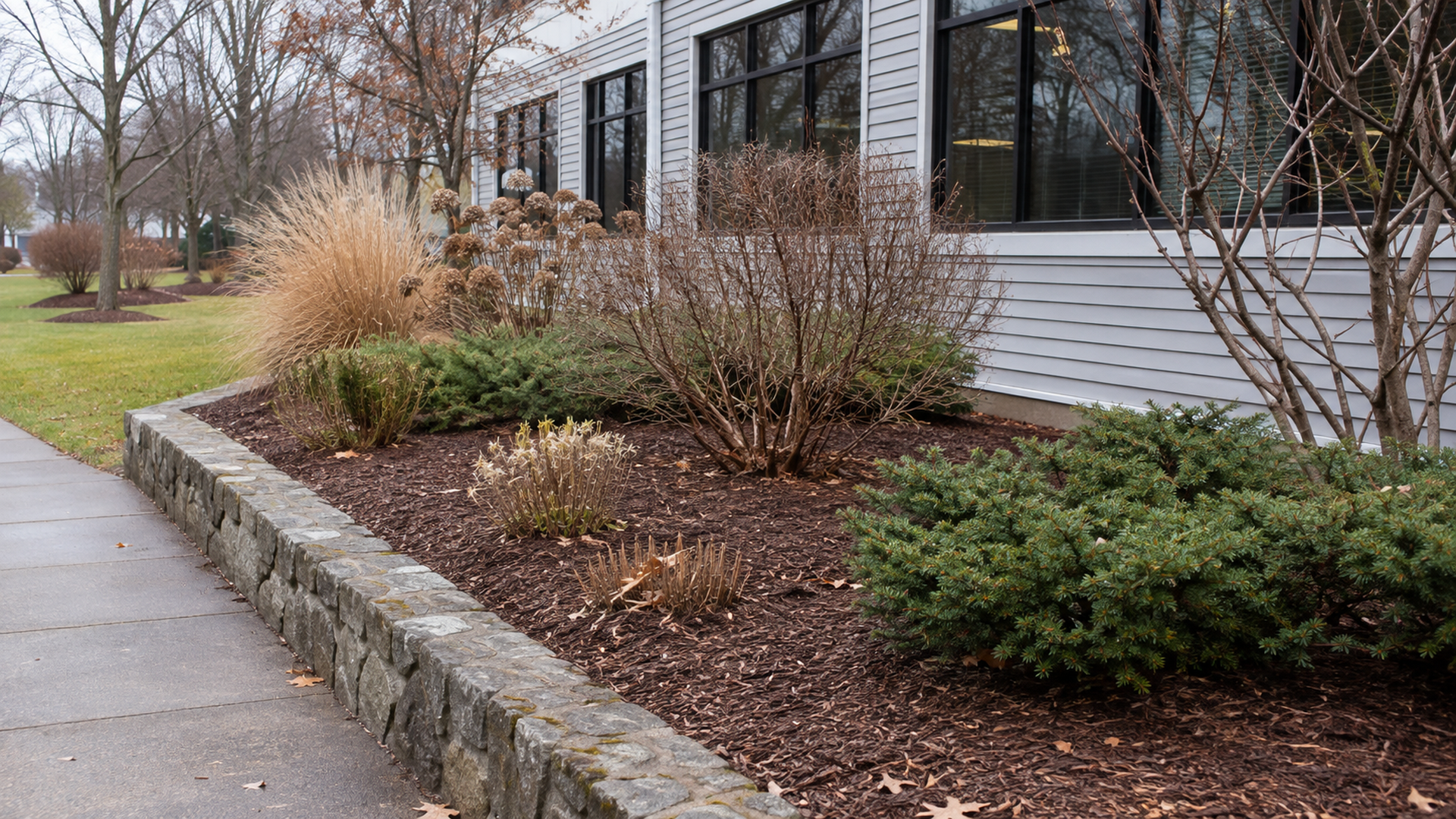
Winter landscapes contain fewer active colors and fewer layers of vegetation, which makes bed condition more noticeable.
Clean edges, balanced mulch, managed plant material, and minimal debris help a property maintain an intentional, professional appearance even during dormancy.
For multifamily communities, HOA-managed neighborhoods, office campuses, medical facilities, and institutional properties, this consistency supports the standards expected by residents, tenants, employees, visitors, and ownership groups.
Winter bed preparation demonstrates that landscape management continues year-round rather than ending with the growing season.
Prepare Your Commercial Landscape for Winter With Princeton Scapes
Winter bed preparation protects soil health, supports shrubs and perennials, improves drainage, and maintains the organized appearance of commercial landscapes throughout the dormant season. By addressing debris, bed structure, mulch, soil conditions, and plant health before winter, property managers can reduce seasonal stress and position the landscape for stronger spring performance.
Princeton Scapes combines Certified Horticulturists, experienced professional crews, and comprehensive year-round commercial landscape services to help property managers, HOA boards, developers, and facility managers protect their landscape investments through every season.
Connect with Princeton Scapes to schedule professional winter bed preparation and ensure your commercial landscape enters the dormant season clean, protected, and prepared for long-term performance.