Late-Season Pruning: Strengthening Commercial Landscapes Before Winter
Posted On
As commercial landscapes move into dormancy, late-season pruning becomes an important part of preparing trees and shrubs for winter. Proper pruning can improve plant structure, reduce the risk of branch failure, maintain clear sightlines, and support healthier growth when spring returns.
For commercial property managers, HOA boards, developers, and facility managers, pruning is not simply an aesthetic task. It is a strategic maintenance practice that protects landscape investments and contributes to site safety, long-term plant health, and professional property presentation.
Princeton Scapes provides horticulturist-led pruning services tailored to the species, age, condition, and location of each plant. With Certified Horticulturists on staff and experienced professional crews, pruning decisions are based on sound horticultural practices and the long-term needs of the property.
Why Late-Season Pruning Matters for Commercial Landscapes
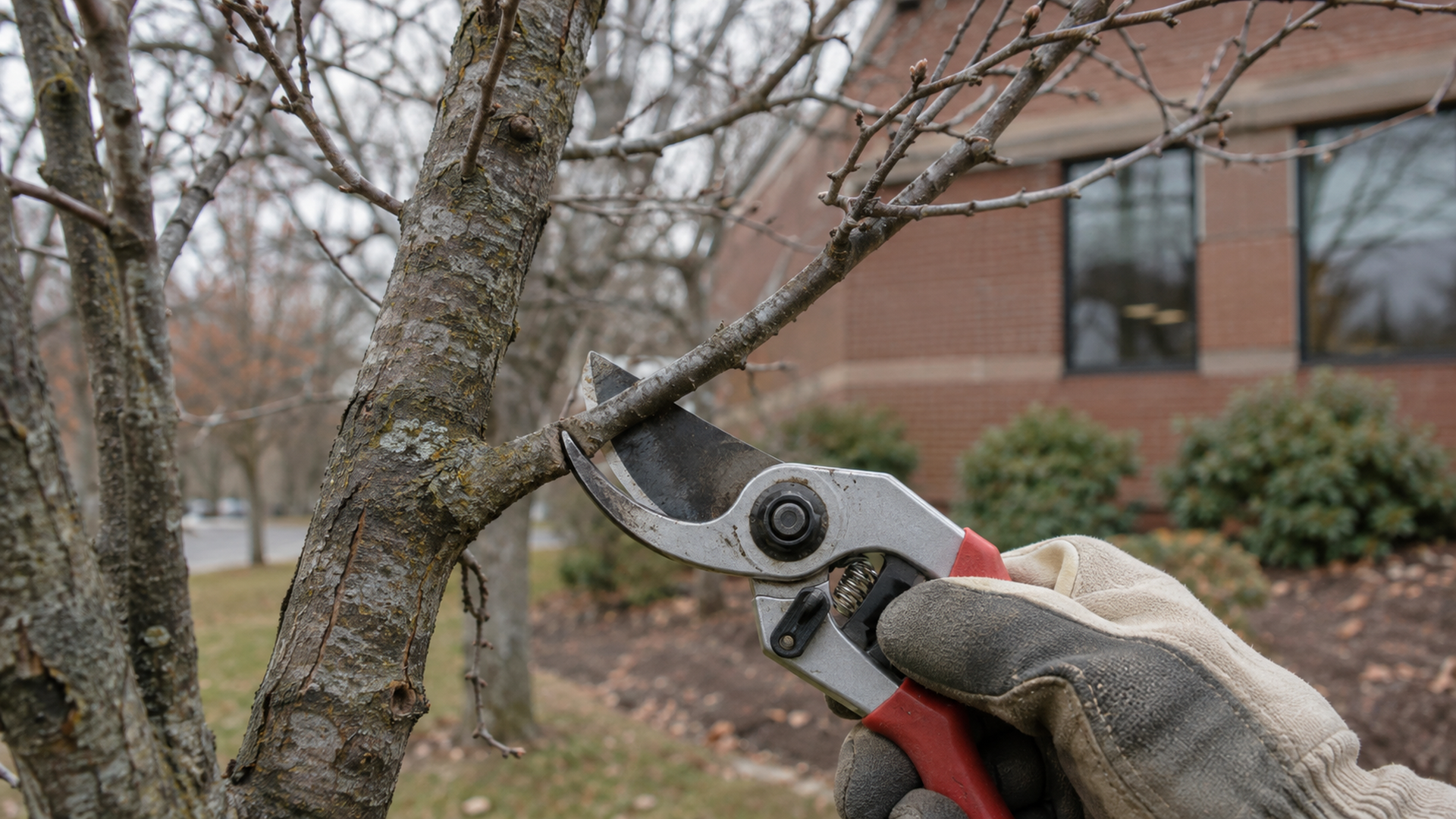
As temperatures cool and many plants move toward dormancy, growth slows and branch structure becomes easier to evaluate. In deciduous trees and shrubs, reduced foliage can make it easier to identify dead wood, crossing limbs, structural weaknesses, and other conditions that may require attention.
Late-season pruning may help:
- Reduce the risk of winter branch failure
- Remove dead, damaged, or declining wood
- Improve plant structure and stability
- Maintain clearance around buildings and walkways
- Improve visibility around signage and lighting
- Support healthier future growth
- Preserve the intended appearance of the landscape
Timing is important. Not every species should be pruned in the same way or at the same point in the season. Certain flowering shrubs, ornamental trees, and other plant material have specific pruning requirements.
Professional horticultural oversight helps ensure pruning is performed when appropriate and in a manner that supports the plant’s natural growth cycle.
Begin With a Thorough Plant Assessment
Effective pruning begins with evaluation rather than cutting.
Before work begins, Princeton Scapes reviews the condition and structure of trees and shrubs throughout the property. The goal is to determine which branches should be removed, which should remain, and how each pruning decision may affect future growth.
The assessment may identify:
- Dead or weakened branches
- Crossing or rubbing limbs
- Broken or storm-damaged growth
- Excessive canopy density
- Poor branch attachments
- Growth encroaching on walkways or buildings
- Branches obstructing signs or lighting
- Plants that have outgrown their intended spaces
This site-specific approach helps avoid unnecessary pruning and ensures that work supports both horticultural health and property functionality.
For commercial landscapes, where plant material often interacts closely with buildings, pedestrian routes, parking areas, and site infrastructure, these evaluations are especially important.
Remove Damaged and Potentially Hazardous Branches
One of the primary objectives of late-season pruning is identifying branches that may create risk during winter.
Limbs weakened by storms, drought, disease, physical damage, or poor structural development may be more vulnerable when snow and ice accumulate. Removing appropriate damaged or compromised growth before winter can reduce the likelihood of unexpected breakage.
This is especially important near entrances, sidewalks, parking areas, roadways, outdoor gathering spaces, lighting, signage, and other frequently used areas.
Proactive pruning supports safer property conditions and may also help reduce damage to vehicles, structures, landscape features, and other site assets.
Hazard assessment should always be based on the actual condition of the plant rather than assumptions based on size alone.
Improve Plant Structure With Selective Pruning
Professional pruning focuses on improving structure while preserving the natural form of the tree or shrub.
Rather than indiscriminately reducing plant size, selective pruning removes specific branches to improve balance, branch spacing, clearance, or structural integrity.
For younger trees, careful structural pruning can encourage stronger branch development and help reduce future maintenance challenges. Mature trees may benefit from the selective removal of dead, damaged, or poorly positioned limbs.
Shrubs can also be managed to preserve their intended shape without excessive shearing or repeated cutting that creates dense exterior growth.
The objective is to develop stronger, healthier plant material that performs reliably over time while maintaining a professional appearance throughout the property.
Improve Air Circulation and Canopy Conditions
Overly dense trees and shrubs can develop poor airflow and limited light penetration within their canopies.
When appropriate for the species, selective pruning can improve internal canopy conditions by removing unnecessary or poorly positioned growth. Better airflow may help reduce prolonged moisture retention and support healthier plant conditions.
This can be particularly beneficial in dense shrub masses, foundation plantings, and other areas where plants have grown together over time.
However, excessive canopy thinning can also stress plants and affect structure. Professional pruning should therefore focus on appropriate, selective cuts rather than removing large amounts of healthy growth without a clear horticultural reason.
Balanced pruning helps maintain plant density while improving long-term form and performance.
Maintain Clearance Around Buildings and Pedestrian Areas
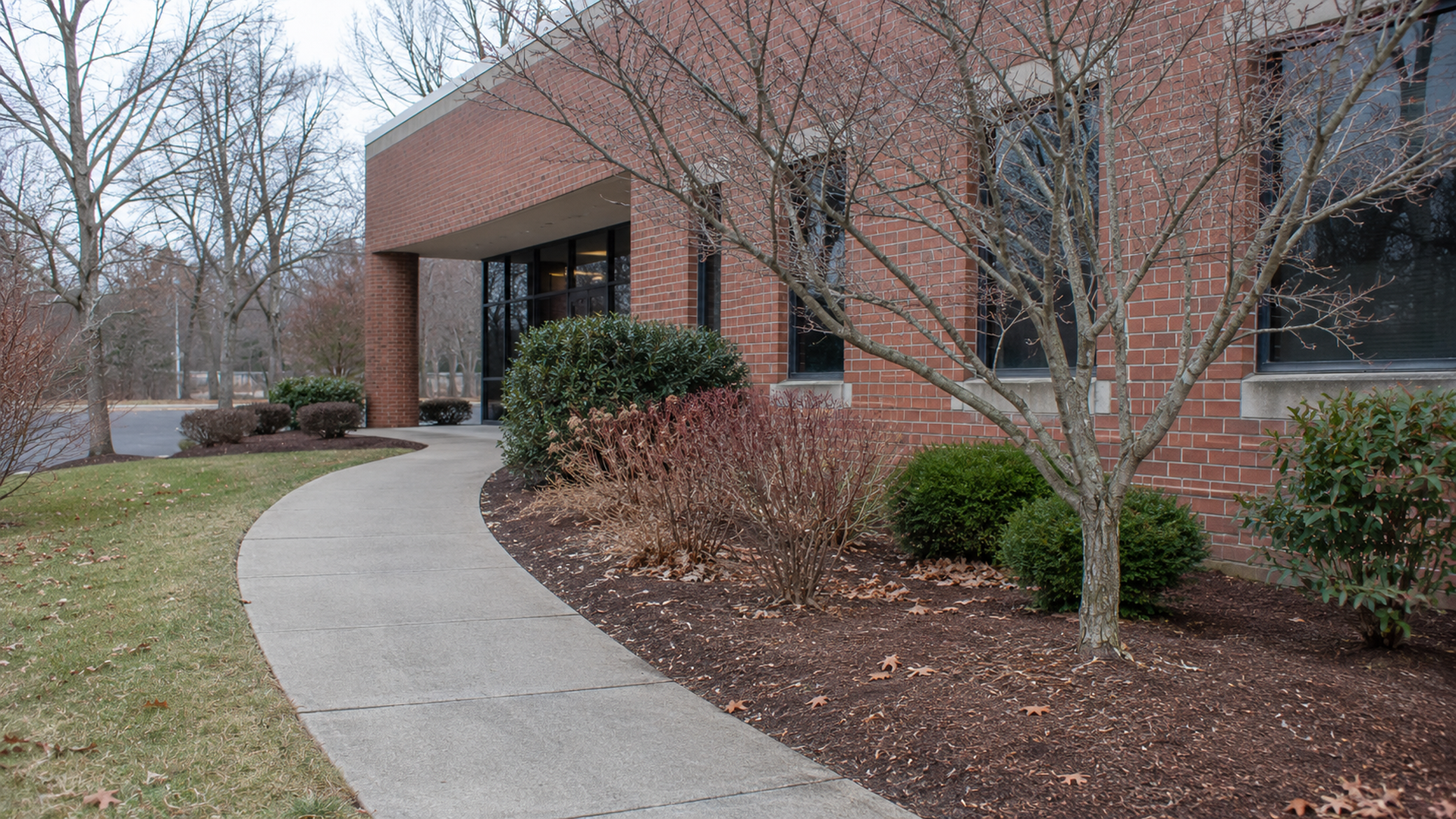
Trees and shrubs are living elements that continue to expand over time. Without periodic management, they can interfere with the functional needs of a commercial property.
Branches may grow into pedestrian routes, obscure signage, block lighting, contact building facades, or reduce visibility near entrances and intersections.
Late-season pruning provides an opportunity to correct appropriate clearance issues while the landscape is entering a slower growth period.
Maintaining proper clearance can help keep sidewalks accessible, preserve visibility around signs, support effective site lighting, improve lines of sight for drivers and pedestrians, reduce vegetation contact with buildings, and reinforce a clean, professional appearance.
For property managers, these improvements support both aesthetics and daily site operations.
Avoid Over-Pruning and Improper Cutting
More pruning is not necessarily better.
Over-pruning can remove excessive foliage, disrupt natural plant form, encourage undesirable growth, and place unnecessary stress on trees and shrubs. Improper cuts can also create wounds that do not close efficiently or increase vulnerability to decline.
Pruning methods should always be matched to the plant and the specific objective.
Practices such as indiscriminate topping, excessive canopy removal, or repeated shearing without regard for plant structure can create long-term problems rather than solve them.
Princeton Scapes’ horticulturist-led approach emphasizes selective, purposeful pruning based on plant health and long-term performance.
This distinction is especially important for commercial properties where mature plant material represents a significant investment and contributes directly to the property’s appearance and value.
Prepare Trees and Shrubs for Winter Conditions
Late-season pruning can be one component of broader winter landscape preparation.
Removing appropriate dead or damaged growth can reduce vulnerability before snow, wind, and ice events. At the same time, surrounding landscape conditions should also be considered.
Trees and shrubs may benefit from proper mulch levels, adequate soil moisture before the ground freezes, and protection from snow storage or deicing materials where necessary.
Younger trees and recently installed plantings may require additional monitoring because their root systems and branch structures are still developing.
By integrating pruning with other winterization practices, commercial properties can prepare plant material more comprehensively for seasonal stress.
Position the Landscape for Stronger Spring Performance
Thoughtful pruning can support a more orderly transition into spring.
Removing dead, damaged, or poorly positioned growth allows maintenance teams to begin the next growing season with plant material that has already been structurally evaluated.
This can improve the consistency of spring growth and help landscape teams focus on new seasonal priorities rather than correcting issues that could have been addressed earlier.
Properly maintained trees and shrubs also contribute to a more polished appearance when foliage returns. For commercial properties, predictable plant performance is valuable because it supports consistent landscape standards across entrances, common areas, building foundations, and other high-visibility locations.
Integrate Pruning Into Year-Round Landscape Management
Late-season pruning is most effective when it is part of an ongoing commercial landscape management strategy.
Tree and shrub care should be coordinated with seasonal cleanup, irrigation management, soil care, plant health monitoring, winterization, and future landscape enhancements.
This integrated approach gives property managers a clearer understanding of how individual maintenance practices contribute to long-term landscape performance.
Princeton Scapes provides comprehensive year-round landscape services that allow pruning decisions to be made within the broader context of property needs, seasonal timing, and future maintenance requirements.
Strengthen Your Commercial Landscape With Professional Late-Season Pruning
Late-season pruning can help protect trees and shrubs, improve site safety, maintain important clearances, and prepare commercial landscapes for winter and spring performance. The greatest value comes from using species-appropriate techniques and making pruning decisions based on plant structure, condition, and long-term growth.
Princeton Scapes combines Certified Horticulturists, skilled professional crews, and comprehensive commercial landscape expertise to help property managers, HOA boards, developers, and facility managers protect their landscape investments throughout the year.
Connect with Princeton Scapes to schedule a late-season pruning assessment and prepare your property’s trees and shrubs for stronger long-term performance.